
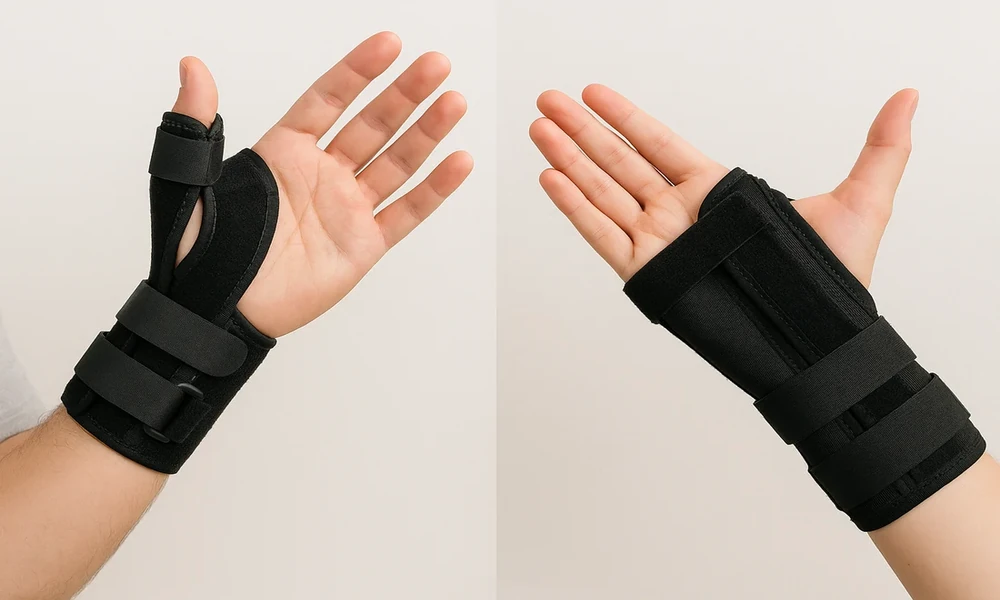
The simplest daily tasks feel challenging when you experience thumb injury. Things such as writing, tying your shoe lace, opening the lids of the jars, holding a cup, or even using a mobile phone might suddenly become impossible all if the thumb is not functioning correctly. Talking about the thumb splint, not every thumb splint provides the same level of comfort or support.
This is why having the right support for your thumb is very crucial. It is because an ill-fitting splint can cause discomfort, restrict blood circulation or fail to provide the stability which is necessary to recover faster.
Whereas, a well-crafted properly fitted thumb spica splint can totally help you recover more comfortably while allowing you to continue many of your everyday activities.
In this blog, we will explain those factors to consider when selecting a comfortable thumb spica splint and how to find one that suits your individual needs.
Understand the Purpose of a Thumb Spica Splint
A thumb spica splint is an orthopedic aid crafted to provide proper support. However, before purchasing one for yourself after you’re injured, it pays to be certain what exactly splints are for in the first place. This aid stabilizes the thumb by restricting movements that could worsen the injury or delay healing.
Depending on its design, it can also provide support to part of the wrist for added stability. Mostly thumb spica splints allow you to perform light daily tasks while keeping the injured thumb protected. Knowing the condition for which you require care will help us identify the right level of assistance.
Choose the Correct Size
Size is one of the main aspects influencing comfort. A splint that is too tight could lead to swelling, reduced feeling, or poor circulation of the thumb. If a splint is too loose it will not be able to immobilize the thumb adequately and will not serve its function as well as possible.
Thumb spica splints are mostly available in different sizes based on hand or wrist measurements. But measuring is essential, so always grab a sizing sheet (if provided) by the manufacturer first to size up before you buy. If your measurements fall somewhere in between any two sizes then ask a medical specialist rather than presuming
Look for Adjustable Straps
Adjustability is one of the most critical components to a brace that fits right. Swelling in the thumb and wrist is likely to change throughout your journey with recovering. Therefore, a good support that uses straps so that you can increase or decrease tightness during the swelling.
A splint that can be secured at multiple points generally provides better support, as it distributes pressure evenly across the hand and wrist. It also helps reduce friction and prevent unnecessary movement.
Consider the Level of Support You Need
Different thumb injuries require varying levels of stabilization. For mild sprains or tendon irritation, a flexible splint can provide adequate support while still allowing for some degree of movement. More support than required may reduce mobility or your comfort too. Less support may even prolong the rehabilitation process too. The better option here is to have proper medical advice.
Select Comfortable Materials
The material composing the thumb spica splint plays an essential role to the patient’s comfort. Because many patients spend so many hours of the day, or wear the splint nearly all the time when the recovery phase first begins, the material should have a soft texture next to the skin.
Some comfort features includes:
- Breathable fabrics that prevent heat buildup.
- Soft inner layer to reduce skin irritation.
- Lightweight construction to reduce hand fatigue
- Smooth edges that prevent rubbing
- Flexible materials around non-injured areas for greater comfort
Check Wrist Support
Some thumb spica splints provide support to the wrist, while others focus primarily on the thumb. If your injury extends down your wrist, or if it’s your doctor’s suggestion to add more stability while your finger heals, a splint that includes wrist support can help provide you with both comfort and an added degree of protection. The design selection should be dictated by diagnosis of your disease & the course of recovery.
Consider Skin Sensitivity
Some people have sensitive skin that reacts to prolonged contact with certain types of clothing or areas subject to pressure. For sensitive skin, use of a soft, porous thumb spica splint with smoothed seams that will make a more comfortable fitting splint. Keeping skin clean and monitored with observation for pressure or irritation areas is important too.
Keeping the skin under the splint clean and dry also helps maintain comfort during prolonged use.
If you continue to experience irritation, consult your doctor if a well- fitted appliance isn’t reducing irritation.
Follow Professional Recommendations
Although many thumb spica splints are available without a prescription, choosing one based solely on its appearance or convenience may not provide the support necessary for your injury.
A doctor will help determine which type of splint is right for your injury based on factors like:
- The severity of the injury
- Healing stage
- Activity level
- Required degree of immobilisation
- Existing medical conditions
Last Thought
When selecting a thumb spica splint, it should involve comfort much more than just finding the right size. An ideal splint should provide the right level of support, fit well without exerting pressure, be made of breathable and comfortable material, and suit your daily activities and recovery needs.
There are many factors that a thumb splint offers like adjustable straps, proper thumb positioning, lightweight construction and wrist support for overall better experience. A properly sized splint may provide and increase comfort level, improve usage as well as cooperation and support healing time as well.
Always talk to your healthcare professional to ensure you choose the correct thumb spica splint for your specific condition. Allowing you to recover safely and effectively while maintaining maximum independence.
